Where the People in Come Get Your Honey Come From
Queer and trans refugees and asylum seekers in Come Get Your Honey, by country: Turkmenistan, Malaysia, Syria, Yemen, Libya, Afghanistan and Iran.
People who see the portraits in Come Get Your Honey often ask where everyone in them is from. The answer is not one place. The people whose countries are in the captions come from Turkmenistan, Malaysia, Syria, Yemen, Libya, Afghanistan and Iran, and the circle around the work reached further than that.
This page goes country by country. For each person I name, I say only what is already published: in their caption, in the book, on this site or in their own words. Anyone unnamed in the book stays unnamed here. A country next to a name is already a lot to know about someone who is queer or trans and was seeking asylum, so I add nothing they have not already made public.
Under each country there is a line or two on the law and the situation there in the years I made the pictures in the book, 2018 to 2021. That is context. It is not anyone’s reason for leaving, which is theirs to tell.
From Turkmenistan
Prince Emrah, who was raised in Turkmenistan, was one of the first people I photographed for the series, and she is one of the reasons it exists. She is of Kurdish and Azerbaijani descent, and lived in Istanbul before she arrived in Germany in 2015. In Berlin she found her healing in belly dancing, and in 2018 she founded the QueerBerg Collective to support queer refugees and trans artists. She also interviewed me for the book, which turned the usual questions around.
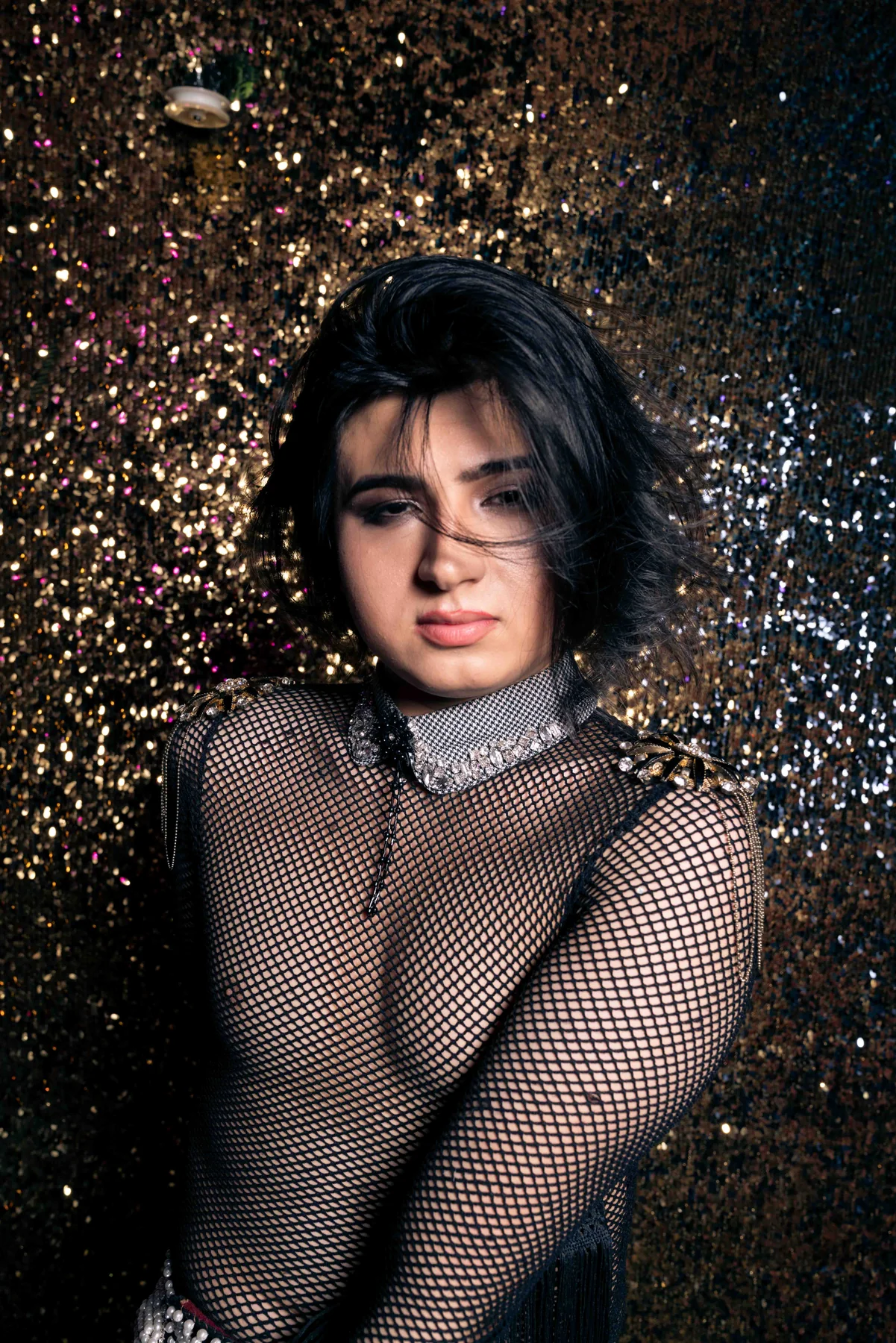
In the years I made these pictures, sex between men was a crime in Turkmenistan, punishable by up to two years in prison.
From Malaysia
Malaysia is named in more of the titles and captions than any other country. “According to sharia laws in Malaysia, a trans* person born in a Muslim family belongs to prison. This is our faith,” Suryani told me. For years she passed as Hindu. She fled Malaysia, went through a four-year asylum process in Denmark, and then sought asylum a second time, in Germany. Suryani With Her Plants is hers, and so is View From the 18th Floor, from the flat she lived in then.
Julie Dancer is a trans refugee from Malaysia who sought asylum in Berlin. She sits with the burlesque performer Noéline la Bouche in Dancers at Their Break. She is also the friend who painted my face after a makeup workshop in the dorm, which is how the self-portrait with her makeup came about.
Two more titles carry the country: Malaysian Dancer and Malaysian Peacock Dancer (I Chose Art to Protect Myself). The second shows a non-binary person from Malaysia near the dorm reserved for LGBTQIA+ refugees and asylum seekers at risk. Amrou Al-Kadhi writes about Malaysian Dancer in the foreword as someone celebrating their queer identity and their Malaysian heritage at once, with no conflict between the two.
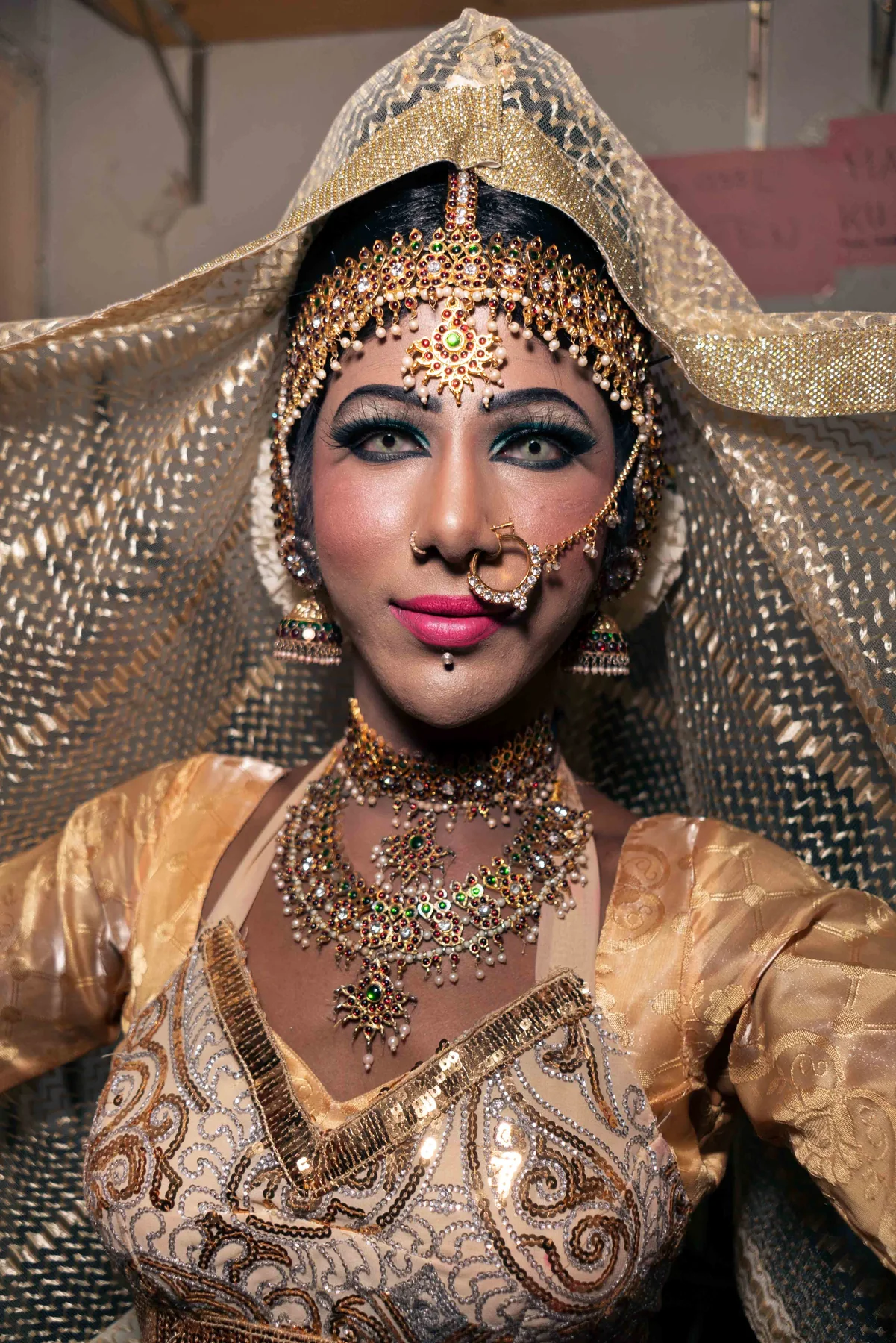
Malaysian federal law punished sex “against the order of nature” with up to twenty years in prison and whipping. State sharia laws against a man “posing as a woman” have been used against trans women, and after the 2018 election came a crackdown on LGBT people.
From Syria
Mirna fled the war in Syria with her family. When she then came out as trans, her family rejected her. When I photographed her, she lived in an apartment provided for LGBTQ+ teens. She is in Mirna in Her Kitchen and Mirna Whipping.
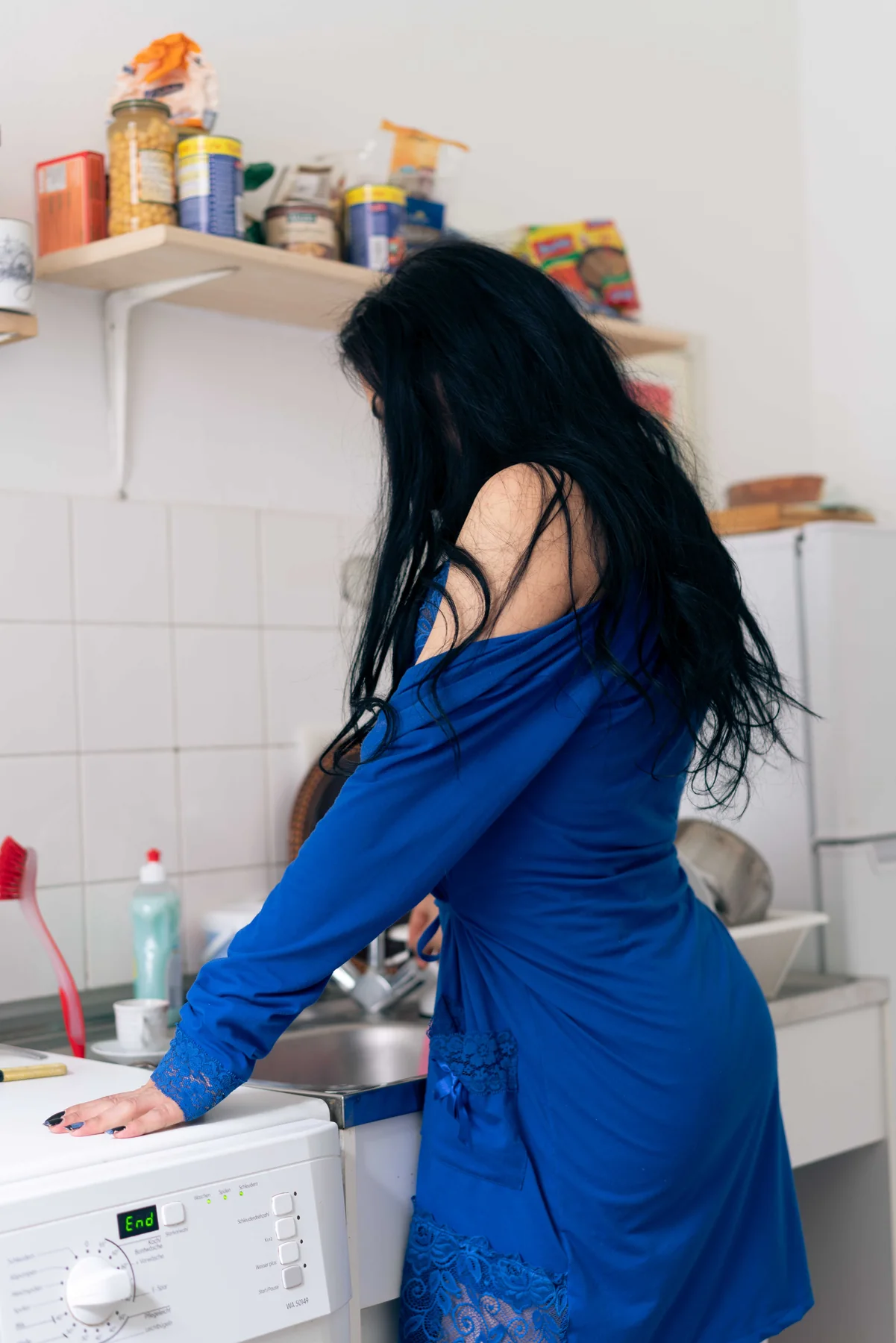
The war in Syria began in March 2011, and by March 2022 neighbouring and nearby countries had taken in more than 5.6 million Syrian refugees. Syrian law punished sex between men or between women with up to three years in prison.
From Yemen
Gabo is non-binary and from Yemen. Gabo is a pseudonym we agreed on for the book, and it is the only name I use. “At my internship, people want to teach me coding, but I don’t want that. I want to start studying European law,” Gabo told me.
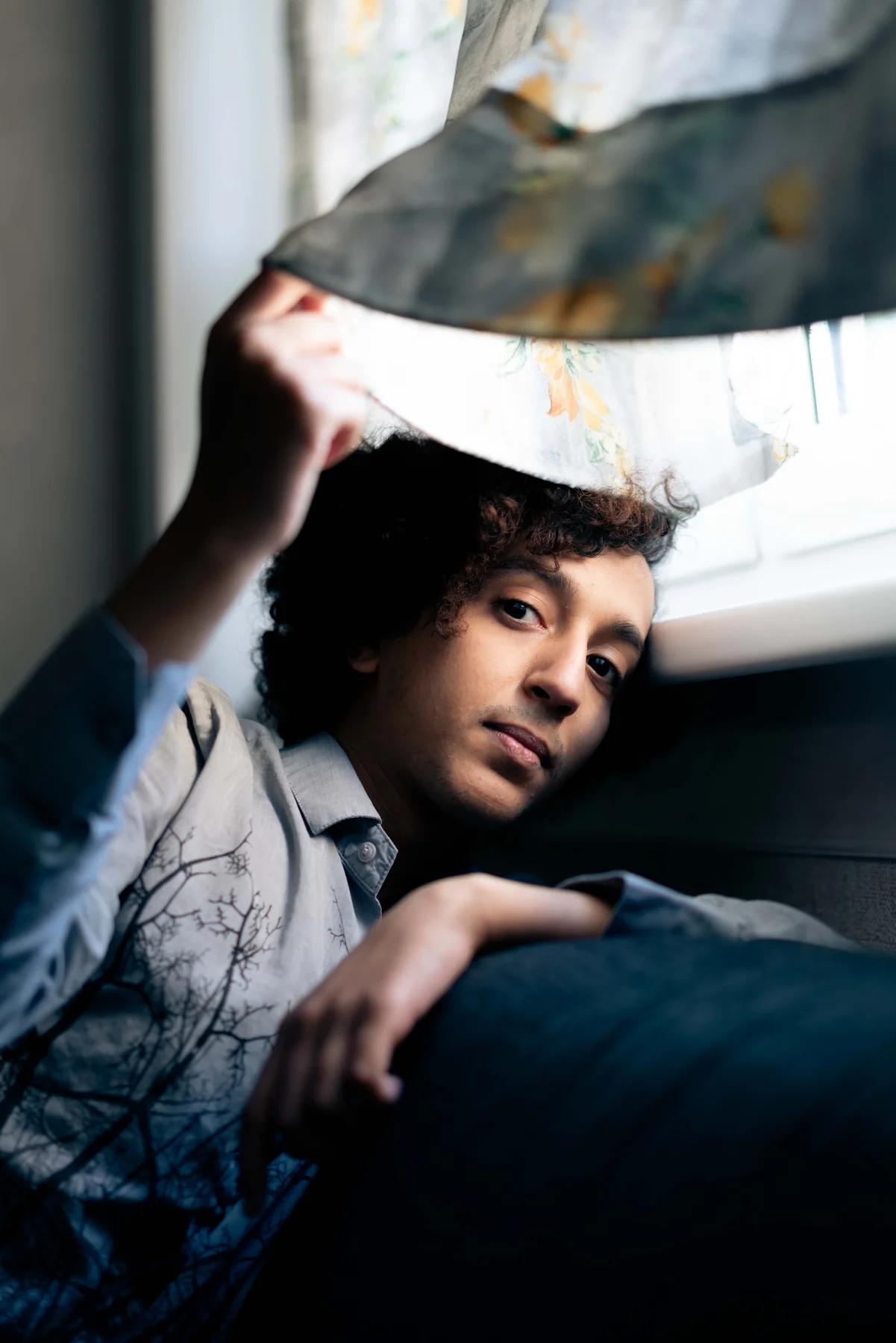
The war in Yemen escalated in 2015, and by late 2021 more than four million people were displaced inside the country. Yemeni law punished sex between men with lashes or prison, and with death by stoning if the man was married.
From Libya
Kylie Divon, who comes from Libya, is on the cover. In the series she appears as Keil Li: the cover is Keil Li at Patricia’s Lap, and there are four more pictures of her. At our talk at Fotografiska Berlin she said she was the first trans woman from Libya to come out publicly, and that her asylum had just been accepted when she moved to Berlin.
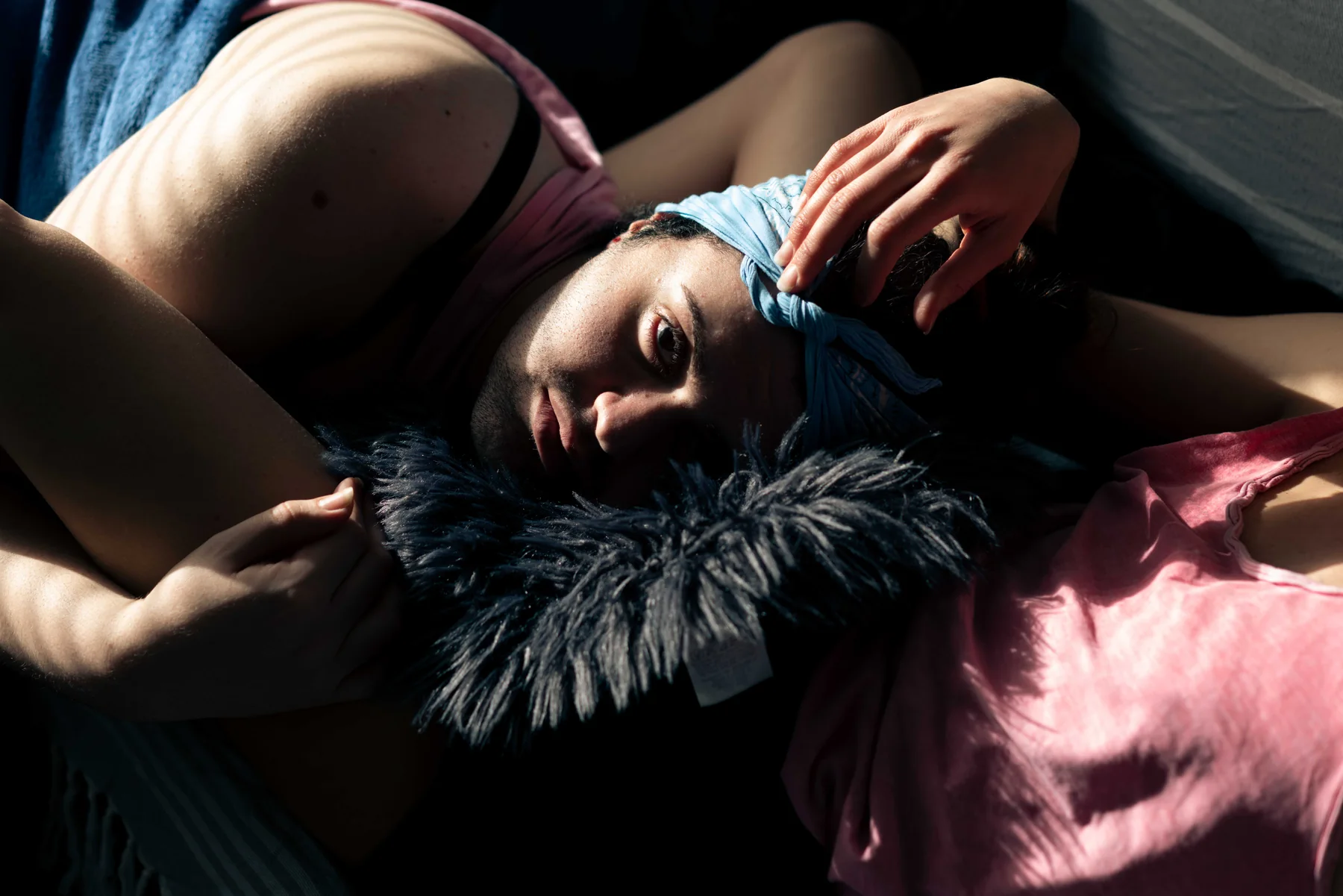
Libyan law punished sex between men or between women with up to five years in prison, and since the 2011 revolution there have been reports of armed groups arresting and executing people accused of it.
From Afghanistan and Iran
“She Is My Mom” (Dormmates) shows two friends from the dorm: a queer refugee from Afghanistan resting his head in the lap of his lesbian friend from Iran. Neither of them is named in the book, and neither is named here.
In Afghanistan, the 2017 Penal Code explicitly made sex between men and between women a crime, and the constitution allowed sharia law to apply, under which it can be punished by death. The Taliban took full control of the country in August 2021. In Iran, sex between men can be punished by death, and sex between women with a hundred lashes.
The wider circle
Nearly fifty people took part in the work in one way or another, and fifteen of them are in the book. Through Emrah and her friends from the dorm I came to know people from Russia, Syria, Serbia, Afghanistan, Nigeria, Iran, Malaysia, Yemen, Libya, Turkey and Palestine. I named most of those countries in a 2021 interview with the Critical Diversity blog of the Universität der Künste Berlin. They describe the circle, and I don’t attach them to anyone in it.
Not everyone in the pictures came as a refugee. Noéline la Bouche, with Julie in Dancers at Their Break, is a burlesque performer, singer and model who lives in Berlin, German with West African roots. And I am German-Turkish-Abkhazian. I moved to Berlin in 2013, and I am not a refugee.
In Germany
In Germany, the asylum law of those years allowed refugee protection for persecution because of sexual orientation or gender identity, and every application is examined individually. Some of the people in the book were still waiting for that decision when I photographed them, and others already had their papers. What the words refugee and asylum seeker mean for the people in the book is in Who is in Come Get Your Honey?
Why there is no full list
Some people asked for a pseudonym. Some did not want their faces shown. Some pictures I held back, because being recognised could put someone in danger with family who did not know. A name, a face and a country together can be enough to find a person, so this page stops where the book stopped. A new context is a new question, and how I ask is in Listening in Practice.
If you want to use one of these photographs, read how to license a photograph from the series first. Consent given for the book does not carry over to a new use on its own.
The full series is online, with every caption. Why only fifteen of nearly fifty people are in the book is in How Fifty People Became Fifteen in the Pictures. The series began in 2018 and is ongoing; the photobook was published by Kehrer Verlag in 2021.